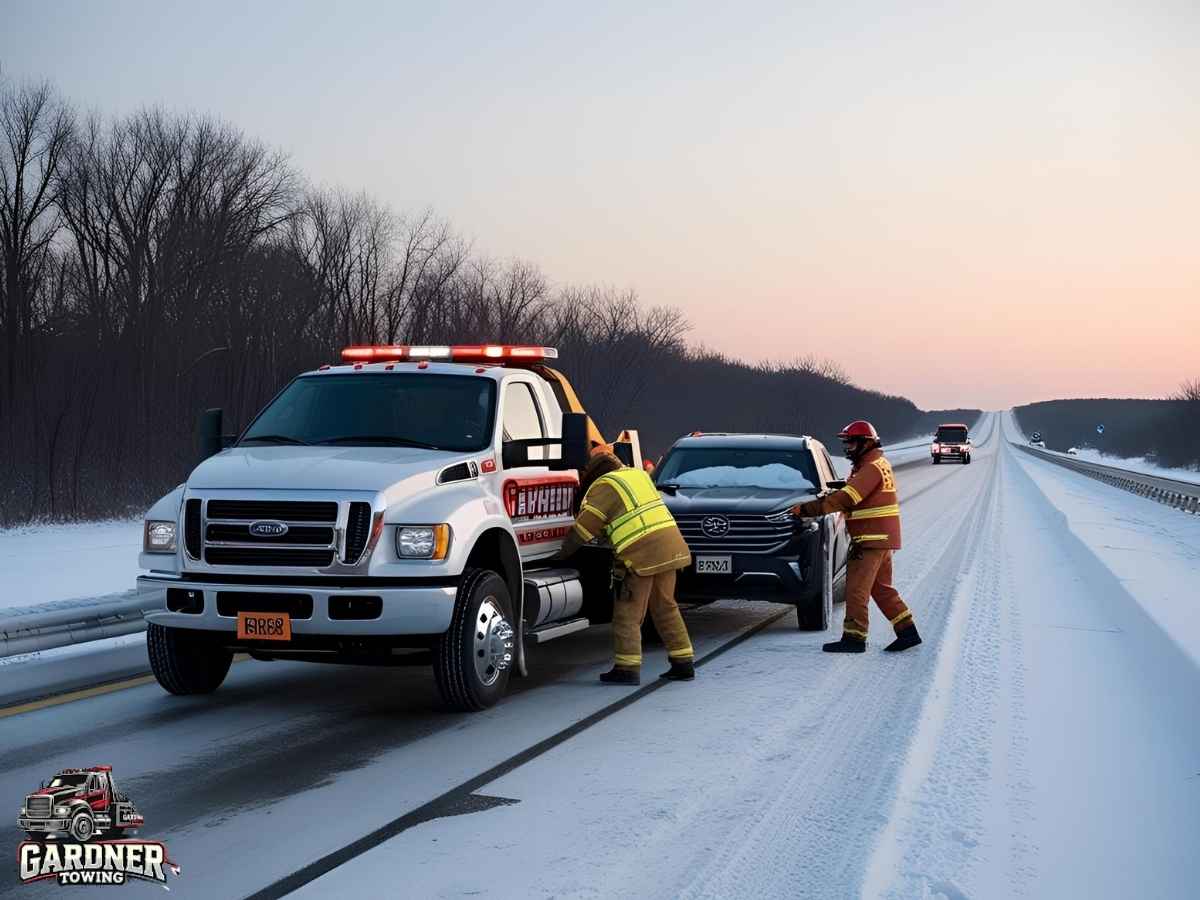
Michigan winters are beautiful but dangerous. Every year, thousands of Michigan drivers face icy roads, heavy snow, and freezing temperatures. According to recent data, Michigan experiences an average of 20,297 crashes annually involving snowy weather conditions—with some years seeing more than 25,000 crashes. That’s a car accident somewhere on Michigan roads because of winter weather roughly every 20 minutes during snowy months.
When winter weather strikes Van Buren and Berrien Counties, the roads around Covert, South Haven, Paw Paw, and surrounding areas become especially hazardous. Your vehicle can break down without warning, leaving you stranded in dangerous conditions. But the good news? Most winter breakdowns are preventable with proper preparation and maintenance.
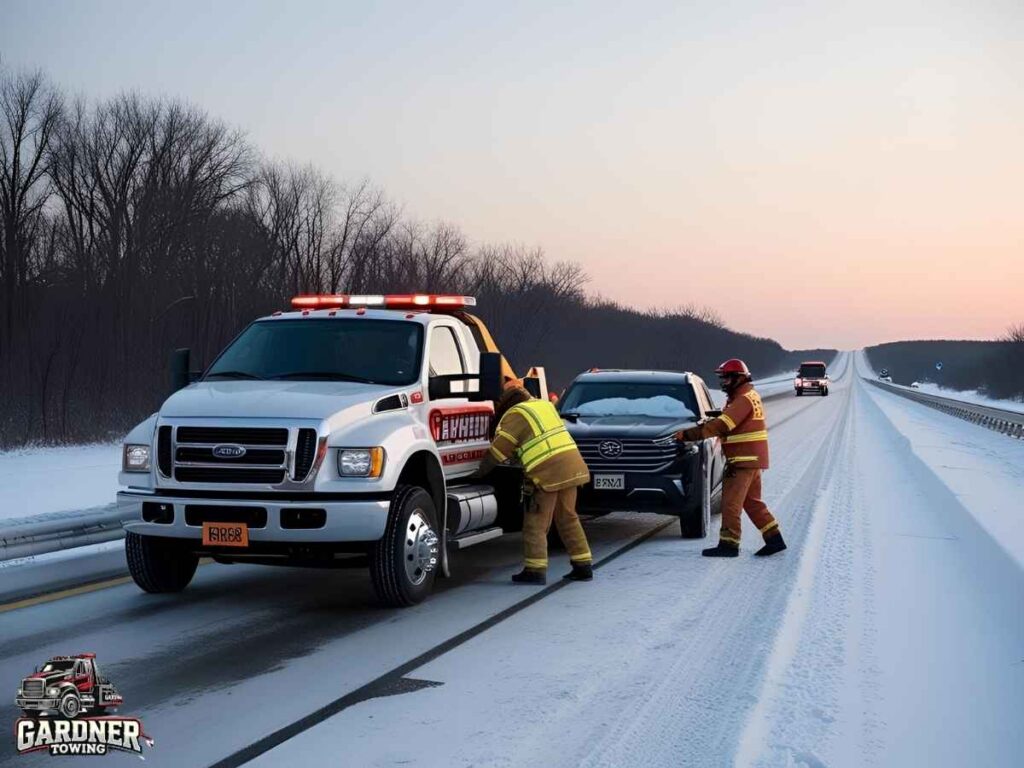
This guide from Gardner Towing shares expert winter driving safety tips and car maintenance advice to keep you and your family safe this season. We’ve responded to thousands of winter emergency calls across southwest Michigan, and we want to help you avoid becoming another roadside emergency statistic.
Understanding Winter Driving Hazards in Michigan
Why Winter Driving Is So Dangerous
Winter driving in Michigan is dangerous because of a combination of factors:
Reduced Tire Traction
When snow and ice cover Michigan roads, your tires lose grip on the road surface. This means your vehicle takes much longer to stop, turn, and accelerate. On snowy or icy roads, it can take up to 10 times longer to stop your vehicle than on dry pavement. If a car ahead of you suddenly stops on I-94, your stopping distance could be 10 times greater than normal—a difference that means the difference between safety and a serious accident.
Poor Visibility
Michigan winter storms bring heavy snow, freezing rain, and dense fog. These conditions reduce how far ahead you can see. Other drivers can’t see you either. This combination of poor visibility creates a recipe for accidents, and accidents often lead to breakdowns and the need for emergency towing services.
Road Surface Changes
Black ice—a thin layer of nearly invisible ice on the road surface—is one of winter’s most dangerous hazards. You might not see it until your wheels are already on it. Bridges and overpasses freeze before regular road surfaces, creating icy patches that appear suddenly. On highways like I-94 or US-31, a sudden encounter with black ice can cause your vehicle to lose traction without warning.
Cold Temperature Effects on Vehicles
Michigan’s bitter cold temperatures create problems for vehicles:
- Engines are harder to start in extreme cold
- Battery power decreases significantly (a battery loses about 50% of its power at 32°F)
- Engine oil becomes thicker, making it harder to circulate
- Tire pressure drops, reducing traction and increasing the risk of blowouts
- Coolant systems can freeze if not properly maintained
- Metal parts become brittle and more prone to breaking
All of these factors together create the perfect storm for winter breakdowns. And when you break down in Michigan winter weather, you need help fast.
Pre-Winter Vehicle Preparation Checklist
Start Preparing Now: Eight Essential Steps
The best time to prepare your vehicle for winter is before the first snow falls. Don’t wait until December or January—prepare your car in late fall. Here’s exactly what you need to check:
Check Your Battery
Your car battery is one of the most critical components during winter. Cold weather reduces battery power, making it harder for your engine to start.
What to do:
- Have your battery tested by a professional mechanic if it’s more than three years old
- If the battery is older, consider replacing it before winter
- Clean any corrosion from battery terminals (white, blue, or green crusty buildup on the battery connections)
- Make sure battery cables are secure and not damaged
- Keep jumper cables or a portable jump-start device in your vehicle
Why this matters: A dead battery is one of the most common roadside emergencies in winter. If your battery fails on a freezing night, you’ll need our roadside assistance service to get back on the road.
Inspect Your Tires Thoroughly
Your tires are your only contact with the road. Winter tires are critical for safety on snow and ice.
What to do:
- Check tire tread depth (the minimum safe depth is 2/32 inch, but for winter driving in Michigan, we recommend at least 4/32 inch)
- Consider switching to winter tires before November—winter tires have a special rubber compound that remains flexible in cold temperatures, providing better traction than all-season tires
- Check tire pressure, which drops in cold weather (for every 10°F drop in temperature, tire pressure drops about 1 PSI)
- Make sure your spare tire is in good condition and properly inflated
Why this matters: Worn tires on snow and ice are a recipe for sliding off the road. Winter tires can mean the difference between control and a crash. If you do have tire problems, our roadside tire assistance is available 24/7.
Change Your Oil to the Right Weight
Engine oil thickens in cold weather. Using the wrong oil weight can make your engine hard to start and cause poor lubrication.
What to do:
- Check your owner’s manual for the recommended winter oil weight
- Many modern vehicles recommend 0W-20 or 0W-30 oil for cold climates (the “0W” means the oil flows better in cold temperatures)
- Change your oil and oil filter before winter
- Use a full synthetic oil if you live in an area with extreme cold
Why this matters: Proper oil keeps your engine running smoothly and starting reliably in cold weather.
Check All Fluid Levels
Winter driving puts extra stress on multiple vehicle systems. Low fluid levels can cause serious problems when you need reliable performance.
What to check:
- Coolant/Antifreeze: This is critical in winter. Your coolant must have the right mix of antifreeze to keep it from freezing. Most people use a 50/50 mix of antifreeze and water, but check your owner’s manual for the correct ratio for your vehicle. Freezing coolant can crack your engine block—a repair costing thousands of dollars.
- Brake fluid: Low brake fluid reduces braking power, which is dangerous on slippery roads
- Windshield washer fluid: Winter brings salt spray, dirt, and grime that coat your windshield. Use winter-grade washer fluid (regular washer fluid can freeze)
- Power steering fluid: Low power steering fluid makes steering harder, especially when steering sharply on slippery roads
- Transmission fluid: Check your owner’s manual for the correct level and condition
Why this matters: All these fluids are essential for vehicle safety and reliability in winter.
Test Your Brakes
Brakes are critical in winter when roads are slippery. You need maximum braking performance when you need it most.
What to do:
- Have a professional mechanic inspect your brake pads and rotors
- Listen for squeaking or grinding sounds when braking (signs of worn brakes)
- Check brake fluid level
- If your brakes feel soft or mushy, have them inspected immediately
Why this matters: If your brakes fail on snowy roads, you could lose control of your vehicle.
Inspect Belts and Hoses
Cold weather puts extra stress on engine belts and hoses. A broken belt or leaking hose can leave you stranded.
What to do:
- Have a mechanic inspect belts for cracks, fraying, or signs of wear
- Check hoses for cracks, leaks, or signs of deterioration
- Replace any worn or damaged belts and hoses before winter
Why this matters: A broken serpentine belt means your vehicle won’t start or will overheat. Both situations require professional towing help.
Clean Your Windshield and Check Wipers
Visibility is critical in winter. Salt spray, snow, and ice can coat your windshield, making it hard to see the road ahead.
What to do:
- Replace windshield wiper blades if they’re more than one year old
- Stock up on winter-grade windshield washer fluid
- Keep your windshield clean and free of ice
- Consider carrying an ice scraper and snow brush in your vehicle
Why this matters: Poor visibility during a storm increases accident risk dramatically.
Check Your Exhaust Pipe
Snow and ice can block your exhaust pipe, allowing dangerous carbon monoxide to back up into your vehicle.
What to do:
- Before winter weather arrives, make sure your exhaust pipe is clear of rust or debris
- After driving in snow, check that snow hasn’t accumulated in your exhaust pipe
- Never drive with your exhaust pipe blocked—carbon monoxide is colorless, odorless, and deadly
Why this matters: Carbon monoxide poisoning can occur within minutes if your exhaust pipe is blocked.
Safe Winter Driving Techniques
Adjust Your Driving for Winter Conditions
Even with a perfectly maintained vehicle, unsafe driving behavior causes accidents. Here’s how to drive safely on Michigan’s winter roads:
Reduce Your Speed
This is the single most important winter driving safety tip.
Why it matters:
- On snowy or icy roads, stopping distance increases dramatically
- Lower speed gives you more time to react to road hazards
- Traction is reduced on ice and snow, making sudden maneuvers dangerous
- Michigan law requires you to drive at a speed that is “reasonable and proper” for road conditions, even if you’re under the posted speed limit
How much slower should you go?
- On dry roads: posted speed limit
- On wet roads: reduce speed by 10-15%
- On snow/slippery roads: reduce speed by 25-50%
- On ice: reduce speed by 50% or more
Increase Following Distance
Following distance is the gap between your vehicle and the vehicle ahead of you.
Winter following distance guidelines:
- Normal conditions: 3-4 seconds behind the vehicle ahead (multiply your speed in miles per hour by 0.15—a car traveling 60 mph should maintain at least 9 seconds of distance)
- Winter conditions: 8-10 seconds behind the vehicle ahead
- Heavy snow/ice: 15-20 seconds behind the vehicle ahead
How to measure following distance:
- Pick a fixed point ahead (a sign, tree, or utility pole)
- When the vehicle ahead passes that point, count the seconds until you reach it
- If you reach it in less than 8 seconds in winter, you’re following too closely
Use Turn Signals Early
Winter driving takes longer. Drivers need more time to react and adjust speed on slippery roads.
Winter turn signal tips:
- Signal earlier than you normally would—give other drivers at least 5-8 seconds notice of your intent to turn
- Use gentle turns rather than sharp, sudden maneuvers
- Reduce speed before turning, not during the turn
- On highways, signal well in advance before changing lanes
Avoid Using Cruise Control
Cruise control can cause your wheels to spin in snow and lose traction.
Why this is dangerous:
- If your vehicle starts to slide, you need maximum control and the ability to brake or accelerate
- Cruise control interferes with traction control
- Your wheels may spin faster on ice, causing loss of control
Instead:
- Keep your foot on the accelerator and brake, ready to react
- This gives you direct control of engine power and braking
Know How to Handle a Skid
If your vehicle starts to slide on ice or snow, panic is your worst enemy.
If your vehicle skids:
- Stay calm—don’t slam on the brakes
- Ease off the accelerator—reduce engine power
- Steer in the direction you want the front of the vehicle to go—if the back of your car is sliding right, steer right
- Don’t jerk the steering wheel—smooth movements are better than sudden jerks
- Once you regain control, straighten the wheels and continue driving slowly
Important: Modern vehicles have traction control and stability control systems that help prevent skidding. Don’t disable these systems in winter—they’re there to help you.
Clear Snow and Ice from Your Vehicle
Before driving, remove all snow, ice, and salt from your vehicle. This isn’t just for visibility—it’s for safety and to protect other drivers.
What to clear:
- Windshield and windows: Complete visibility is essential
- Mirrors: You need to see behind and beside your vehicle
- Headlights and taillights: Other drivers need to see you
- License plate: Law enforcement and emergency responders need to identify your vehicle
- Roof: Snow flying off your roof can strike other vehicles and cause accidents
- Wheels and undercarriage: Snow buildup can cause vehicle control problems
What to Do If You Get Stranded or Break Down
You’re Stuck in Winter Weather: Immediate Steps
If your vehicle breaks down or gets stuck in winter weather, your immediate actions can save your life.
Stay Calm and Assess Your Situation
The first thing to do when you realize you’re in trouble is to stop and think.
Ask yourself:
- Am I in a safe location or am I blocking traffic?
- Is my vehicle operational or completely disabled?
- Am I in extreme cold conditions?
- Am I on a major highway or a smaller road?
- What’s my current cell phone battery level?
Stay Inside Your Vehicle (In Most Cases)
You should stay in your vehicle if:
- You’re safely off the roadway
- Your vehicle provides shelter from weather
- Help is on the way
- You don’t have a safe place to go
You should leave your vehicle if:
- Your vehicle is on fire or actively catching fire
- You’re in immediate danger from traffic
- You can see a safe building or shelter very close by
- You’ve been instructed to leave by emergency personnel
Why stay in your vehicle:
- Your vehicle provides insulation and shelter
- Rescuers can find you more easily
- You have a radio to call for help
- It’s easier to get information from your location with the vehicle as reference
Turn on Your Hazard Lights and Stay Visible
Immediately after:
- Activate your hazard lights to alert other drivers
- If you have reflective triangles, place them 50, 100, and 200 feet behind your vehicle
- If you have road flares and it’s safe, light them for visibility
- Turn on your headlights (low beam) during the day or poor visibility
- Don’t open your trunk or hood unless you’re sure you can fix the problem yourself—an open vehicle is harder to see from a distance
Call for Help: Contact Gardner Towing
Once you’re safely stopped and visible, call for professional help.
Call Gardner Towing at +1 (269) 519-0528
When you call, tell us:
- Your exact location (highway and direction, mile marker, nearby landmarks, or cross streets)
- Your vehicle details (year, make, model, color, license plate)
- Your situation (stuck, won’t start, accident, etc.)
- Your safety status (injured, alone, with family, etc.)
- Current weather conditions
Why you need a local towing company:
- We know southwest Michigan roads intimately
- We have 24/7 emergency towing availability
- Our 15-minute response guarantee in Covert means faster help
- We have specialized equipment for winter conditions
Keep Your Vehicle Warm While Waiting
While you wait for help:
Do:
- Keep your engine running to provide heat
- Keep the cabin door(s) locked for security
- Stay awake—don’t fall asleep (hypothermia can make you drowsy)
- Use your hazard lights to signal for help
- Stay in your vehicle unless absolutely unsafe
- Huddle together if you have passengers to share body heat
Don’t:
- Never run your engine with the exhaust pipe blocked (snow buildup)—deadly carbon monoxide can enter your vehicle
- Don’t use your stove or grill inside the vehicle—these produce carbon monoxide
- Don’t abandon your vehicle to walk for help (statistics show stranded drivers are more likely to be found if they stay with their vehicle)
Stay Warm and Prepared
Keep an emergency winter kit in your vehicle year-round:
Winter emergency kit essentials:
- Blankets or sleeping bags (thick, insulating ones)
- Extra winter clothing and hats
- First aid kit
- Medications (any prescriptions you take regularly)
- Snacks and bottled water
- Flashlight with extra batteries
- Jumper cables or portable jump-start device
- Tire chains (if you drive at higher elevations)
- Reflective triangles or road flares
- Jumper cables
- Basic tools (jack, lug wrench, screwdrivers)
- Mobile phone charger or portable battery pack
- Phone numbers for family and emergency services
Common Winter Breakdown Scenarios and What to Do
Dead Battery in Freezing Temperatures
Symptoms:
- Engine won’t start or turns over very slowly
- Clicking sound when you try to start the engine
- Dim headlights or dashboard lights
What to do:
- Try starting your vehicle normally (sometimes it just needs more time in extreme cold)
- If that doesn’t work, call our roadside assistance service for a jump-start
- If you have jumper cables and another vehicle is available, a jump-start might work
- If the battery won’t hold a charge, you’ll need towing to a repair facility
Prevention:
- Have your battery tested before winter if it’s more than 3 years old
- Keep your battery terminals clean
- Maintain proper battery connections
Vehicle Won’t Start in Cold Weather
Symptoms:
- Engine cranks but won’t turn over
- Clicking or grinding sounds
- Completely dead (no lights, no sounds)
What to do:
- Wait 15-30 minutes—sometimes engines just need extra time to warm up in extreme cold
- Try turning on headlights and dashboard lights for a minute, then try starting again
- If it still won’t start, call Gardner Towing for emergency towing
Prevention:
- Use the correct winter oil weight
- Keep your battery in good condition
- Keep your fuel tank at least half full (low fuel can freeze in the lines)
Stuck in Snow or Ice
Symptoms:
- Your wheels are spinning but vehicle isn’t moving
- You’re sliding on ice and losing control
- Your vehicle is in a ditch or snowbank
What to do:
- Stay in your vehicle and activate hazard lights
- Don’t try to force your way out (this often makes things worse)
- Call Gardner Towing for professional recovery
- Our team has specialized equipment to safely extract vehicles from snow, ice, and ditches
Prevention:
- Keep winter tires on your vehicle
- Reduce speed in snow and ice
- Avoid sudden maneuvers and lane changes
Overheating Engine
Symptoms:
- Temperature gauge moving toward the red zone
- Steam coming from under the hood
- Sweet smell from the engine compartment
What to do:
- Do not open the hood—steam from the cooling system causes severe burns
- Pull over safely and turn off the engine
- Wait 15-20 minutes before checking anything
- Call Gardner Towing if you’re stranded or on a highway
Prevention:
- Check antifreeze/coolant level before winter
- Use the correct coolant mixture (usually 50/50 antifreeze and water)
- Have your cooling system inspected before winter
Fuel Line or Engine Freeze
Symptoms:
- Vehicle runs fine then suddenly sputters and dies
- Won’t restart after running fine earlier
- Happens after driving through deep snow or slush
What to do:
- Don’t try restarting repeatedly (this drains your battery)
- Call Gardner Towing for roadside assistance or emergency towing
- You may need to be towed to a repair facility where technicians can thaw and inspect fuel lines
Prevention:
- Keep your fuel tank at least half full
- Use gasoline with fuel additive in winter (helps prevent freezing)
- Keep your vehicle garaged when possible in extreme cold
Why Professional Winter Towing Matters
Winter Conditions Make Towing More Dangerous and Necessary
Winter weather doesn’t just break down vehicles—it makes towing them more challenging and hazardous.
Why you need professional winter towing:
Specialized Equipment
Winter towing requires specialized knowledge and equipment that personal towing services don’t have. Gardner Towing has flatbed towing services specifically designed for winter conditions:
- Flatbeds prevent vehicles from sliding during transport
- Specialized equipment for recovery from snow and ice
- Winches designed to safely extract vehicles from ditches
- De-icing equipment to prevent further damage during transport
Professional Drivers with Winter Experience
Our team has years of experience navigating Michigan’s winter roads:
- We know which roads are most dangerous in winter weather
- We understand how to drive safely with disabled vehicles in tow
- We have experience extracting vehicles from difficult situations
- We know local shelters and repair shops to get you help fast
24/7 Winter Availability
Gardner Towing operates 24/7 throughout winter, including during and immediately after storms when other services are overwhelmed:
- We don’t close during blizzards or ice storms
- Our 15-minute response guarantee means faster help
- We have multiple tow trucks ready to respond to multiple emergency calls
Insurance and Liability Protection
Professional towing companies like Gardner Towing carry insurance and liability protection:
- You’re protected if property damage occurs during towing
- We’re licensed with USDOT #4045375 for professional standards
- Our safety record protects you—we’ve had zero crashes on our USDOT record
Peace of Mind in Dangerous Situations
When you’re stranded in winter weather, having a professional company respond means:
- You don’t have to try unsafe roadside repairs
- Someone will find you quickly with our local knowledge
- You’ll get professional advice about your vehicle’s condition
- You’ll be transported safely to your destination or a repair facility
Location-Specific Winter Help in Michigan
Gardner Towing Serves Your Community in Winter
No matter where you’re stranded in Van Buren or Berrien Counties, Gardner Towing provides 24/7 winter roadside help. We serve:
- South Haven – Lake Michigan community with challenging winter roads
- Paw Paw – Wine country with rural roads prone to ice
- Hartford – Rural area with long distances between towns
- Covert – Our home base with rapid response times
- Bangor, Coloma, Watervliet, Lawrence – All surrounding communities
We also serve major highways including I-94, M-140, and US-31—the most dangerous roads in winter.
Quick Winter Emergency Reference Guide
When to Call Gardner Towing: Quick Reference
Dead Battery → Call Gardner Towing roadside assistance at (269) 519-0528
Vehicle Won’t Start → Call Emergency towing service
Stuck in Snow or Ice → Call Professional recovery service
Overheating Engine → Pull over, wait 20 minutes, then call if problem persists
Sliding on Ice → Stay calm, steer in direction you want to go, reduce speed
Can’t See the Road → Pull to shoulder safely, activate hazard lights, call for help
Stranded on I-94 → Look for mile marker, call with your location
Fuel Line Frozen → Call Emergency towing for transport to repair facility
Conclusion: Stay Safe This Winter
Michigan winters are beautiful, but they’re also dangerous. Every winter, thousands of Michigan drivers face breakdowns and emergencies because of snow, ice, and cold. But most of these emergencies are preventable.
By following this guide:
✓ Prepare your vehicle with a complete fall maintenance check ✓ Adjust your driving for winter conditions
✓ Keep an emergency kit in your vehicle ✓ Know what to do if you get stranded ✓ Call professionals when you need help
You can dramatically reduce your risk of a winter breakdown and stay safe on Michigan’s roads.
When winter weather does strike and you need help, Gardner Towing is available 24/7 across Van Buren and Berrien Counties. We have the equipment, experience, and local knowledge to get you safely back on the road.
Contact Gardner Towing for Winter Emergency Help
Phone: +1 (269) 519-0528
Address: 69458 34th Ave, Covert, MI 49043
Hours: Available 24/7 | 365 Days Per Year (Including Winter Storms)
Website: Visit Gardner Towing
Winter Emergency Services Available:
- Emergency Towing – Immediate response in winter storms
- Flatbed Towing – Safe transport in snow and ice
- Roadside Assistance – Jump-starts, fuel delivery, and help
- Winch-Out Recovery – Professional extraction from ditches and snow
- Long-Distance Towing – Safe transport to distant repair shops
Gardner Towing LLC | Covert, MI 49043 | Serving Van Buren County & Berrien County | USDOT #4045375 | Fully Licensed & Insured | Your Local Winter Emergency Towing Experts
Read More Winter Driving Articles from Gardner Towing
Learn more about winter safety and emergency preparedness:
- I-94 Van Buren County Car Breakdown Guide – Highway-specific survival tips
- Flatbed vs Hook Towing Services – Which is safer in winter
- Emergency Towing Services in Benton Harbor – Local emergency help
- 24/7 Emergency Towing Tips – What to do when stranded
- Your Complete Guide to Roadside Emergencies – Full emergency preparedness guide
Quick Statistics: Winter Driving in Michigan
- Average annual snow-related crashes in Michigan: 20,297
- Stopping distance on ice: Up to 10 times longer than dry roads
- Battery power reduction in 32°F weather: Approximately 50%
- Recommended winter tire tread depth: 4/32 inch (minimum safe depth: 2/32 inch)
- Following distance in winter: 8-10 seconds (vs. 3-4 seconds in normal conditions)